Notes from the Optimizely Partner Close-Up in Stockholm
350 partners. One historic venue. A former Finance Minister. And, apparently, Vikings. Partner closeup had a lot to offer. There are events where you sit in a conference chair, eat a slightly too-dry lunch, and leave with a tote bag and mild existential dread. And then there are events that genuinely shift the way you think about your industry.
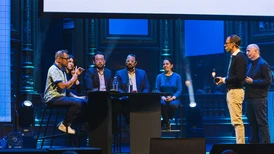
The Optimizely Partner Close-Up, held at Berns in Stockholm in May 2026, was very much the latter.
Berns, for those who don’t know the place, is a 19th-century entertainment palace with chandeliers, grand ballrooms, and enough history to make any slide deck feel slightly underdressed. It suited the occasion. Have to say I would like to see some Finnish metal band on a gig in that venue… But yeah, back to the event.
"Stop selling shovels. Start selling holes."
Let's start with the line that probably caused the most uncomfortable nodding in the room.
The message for Optimizely's partner community was refreshingly blunt. Clients don't want CMS implementations. They want business outcomes. They want the hole, not the shovel. They want leads, conversions, reduced time-to-publish, and measurable ROI, not a carefully scoped migration project that takes 18 months and ends with a ribbon-cutting ceremony.
Stating the obvious of course, but we need to hear it from time to time. This isn't a new thing. But it lands differently when someone says it out loud to a room of 350 people whose revenue depends on selling those development shovels by the hour.
The shift being asked for is real: from feature-centric conversations to outcome-based commercial models. From "we'll implement your CMS" to "we'll help you grow."
Uncomfortable? Well, sure it is. Necessary? Absolutely for the whole market.
Half the Optimizely market is still on CMS 11
Plot twist: the future is agentic AI, but a significant chunk of the present is still running on legacy systems.
Our own CEO Linus Ekström shared some rather sobering data on the state of Optimizely CMS adoption across the Nordics and Europe:
- 45% of Nordic sites are still on CMS 11 or older
- 43% of European sites haven't made the move yet
That's not a modernisation gap. That's a modernisation canyon.
The encouraging reframe? Modernisation isn't just re-platforming anymore. It's a total rethink of content structure making it "agent-ready." Which means the opportunity isn't just a technical migration. It's a strategic transformation. That's a different conversation. And, arguably, a much more interesting one to have with clients.
And that is something for all partners to think real hard. How to move those clients to new Agentic ready era instead or replatforming to something totally different.
Welcome to the Agentic era (The CMS just got a promotion)
The headline theme of the day, delivered with clarity by Nazanin Ramezani, VP at Optimizely, was a reframing that will take a while to fully sink in:
We are no longer in the era of Digital Experience. We are entering the era of Agentic Experience.
AI is beginning to eat the traditional user interface. When an AI agent can assemble, personalise, and deliver content on demand, the CMS stops being a publishing tool. It becomes more and more of an infrastructure layer. A system of record. The thing that ensures content is accurate, structured, and machine-readable.
Think of it less like a word processor and more like a database that happens to power experiences across every channel, including ones that don't have a visual interface at all.
The practical implication? A dual-content strategy:
- For humans: Rich, contextual, short-term content generated on demand
- For machines: Highly structured, factual "nutrition labels" – clean data that AI agents and RAG systems can use
From a reality check point of view, most organisations aren't doing either of these things particularly well yet. Which is either terrifying or a massive opportunity, depending on where you are standing. And many companies are not going to be those early adapters anyway. Finding the middle road to catering companies in different stages is the key to success.
Europe's productivity problem (and why it matters for you)
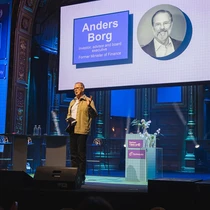
Here's where it got unexpectedly interesting in the event. Anders Borg, former Finance Minister of Sweden, took the stage to give the event a macroeconomic dose of reality That gave us information about oil market, Swedish market and his thoughts about AI The short version:
- No need to get fussed about the oil crisis like it was in the past. Banks are in much better state today so there is much more resilience in the market
- The US has seen a 3% productivity surge driven by AI adoption
- Europe, meanwhile, is flirting with what Borg called "perma-stagnation"
- AI isn't just a productivity tool at this point. It's a capital expenditure mandate for organisations serious about staying competitive
His few pieces of strategic advice offered with the directness of someone who has managed national budgets were worth listening to, and here’s what I understood from it.
- Copy with pride. Replicate what's working globally. Don't reinvent if not necessary
- Involve the CFO. AI is capital deployment, not an IT line item. Treat it accordingly.
- Maintain the balance sheet. Financial health matters more, not less, during rapid change.
- Prioritize ruthlessly. Do the high-return, low-risk things first. Then breathe.
Also, from a Finnish market perspective it was partly bittersweet but also reassuring to hear him mentioning how many companies have grown and been sold in Sweden but the owners have been bringing money back to Sweden investing their money for new companies in their homeland. Now that is something that also Finland needs badly. Maybe someday.
The part that actually makes it worth going
Here's what doesn't always make it into the official recap but arguably matters most.
Jessica Dannemann, VP Partner at Optimizely, described Close-Up as a "true community event." And the reason she had to say that out loud is because it actually is one, which is rarer than you'd think.
350 partners showed up. Partners who compete with each other. Who are working on the same deals, in the same markets, with the same clients. And yet, as multiple people noted in the room and in the comments after, the culture is open. People share. People collaborate. People are, in Mark Welland's words, colleagues first and competitors second.
That's not something you manufacture with a well-designed agenda. It's something that builds over time. And it's one of the more underrated things about this particular ecosystem.
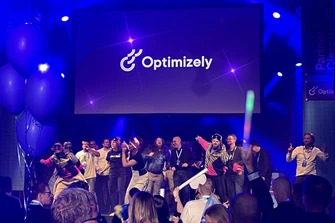
Also: there were Vikings. Called on the stage with a red button after someone was pushing corporate jargon from Optimizely. Since we are indeed open community, some people would have liked to push that red button a few more times during the day. Later in the evening Vikings also made the stage for a song. Loved it. Sang along even though I did not understand a word. Everyone should be treated with Vikings and their songs from time to time.
And last but not least. As a football enthusiast, I’m more than happy that Vuvuzela’s are not anymore part of World cup events. But somehow those really worked out great when Optimizely gave the evening’s last partner recognition to OMVP’s. That sound when all tables had horns sounding in that venue was infernally great.
The takeaway (without any rocket emojis)
The Optimizely Partner Close-Up 2026 wasn't a product launch event dressed up as a partner day. It was a genuine conversation about where the industry is going and what it asks of the people trying to lead clients through it.
The headline, if you had to write one, is this: the website era is ending, and the agentic era is beginning. Content is becoming an infrastructure. Personalization at scale is no longer theoretical. And the partners who thrive will be the ones who lead with outcomes, not features.
The other headline is quieter, but just as important is that doing this in a room with 350 people who genuinely want each other to succeed is a pretty good way to figure out how.
Moments from the Close-Up stage
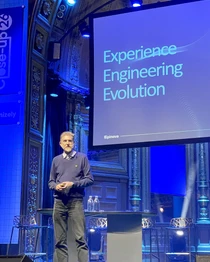
From Linus Ekström and Anders Borg on stage to the evening’s OMVP recognition.
We would like to hear what you think about the blog post