Optimizely’s strategic pivot: what the move to an AI platform for marketing means for enterprise marketers
Optimizely's latest repositioning isn't just a brand refresh. It reflects a broader industry shift from platform consolidation to AI-powered execution. The question is no longer whether agentic marketing is coming, it's whether enterprise organizations are ready for what comes next.
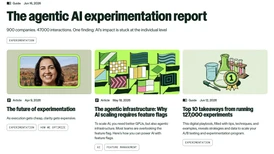
The marketing technology landscape has spent the last several years chasing platform consolidation. Unify CMS, commerce, personalization, experimentation, and content into a single operating environment to reduce integration complexity, accelerate campaign velocity, and restore cross-channel visibility. Optimizely One was built on that foundation.
With AI the conversation has shifted rapidly. Vendors start to position them as agentic systems capable of goal-directed execution across the entire customer journey. Optimizely’s latest brand and content repositioning reflects this broader industry inflection point: the next stage of platform evolution isn’t about where your data lives, but what your platform can actually do with it.
Why the market is pivoting
Just a few good pointers why this is happening.
- Operator fatigue: Marketing teams have too many tools and excels, manual workflow handoffs, and fragmented measurement. The platform that only surfaces insights is no longer worth it.
- AI maturity: Foundation models have moved past content generation into reasoning, planning, and autonomous decision-making within defined guardrails.
- Commercial pressure: Boards and CFOs are prioritizing platforms that accelerate time-to-value, reduce operational drag, and directly tie to revenue outcomes rather than vanity metrics.
Optimizely’s rebrand isn’t a cosmetic refresh to more colourful hip ‘n pop Marvel cartoon -like marketing universe. It also signals a deliberate move from platform-as-hub to platform-as-executor. The question for buyers isn’t whether agentic marketing is real, it’s how mature the implementation is, where the guardrails live, and what success actually requires on the ground.

What buyers should evaluate before adopting
The agentic promise is compelling, but platform claims routinely outpace implementation maturity. For organizations evaluating this shift, the focus should move beyond capability demos to operational readiness:
- Guardrail architecture: Who defines boundaries, and how are they enforced? Look for explicit controls around brand voice, pricing logic, compliance rules, and data privacy. Systems that optimize without constraints create more problems than they solve.
- Measurement & attribution frameworks: Agentic workflows generate action fast. Buyers need systems that tie outcomes to clear KPIs, maintain audit trails, and integrate with existing analytics stacks. If you can’t measure the impact, you can’t scale the investment.
- Change management & team structure: Agentic platforms don’t eliminate marketing operations, they transform them. Teams shift from manual execution to goal-setting, exception handling, and continuous refinement. Success requires new roles, training, and cross-functional alignment between marketing, commerce, IT, and data science.
- Integration reality: Even agentic systems rely on clean data pipelines, consistent taxonomy, and reliable APIs. Platforms that claim autonomy but require extensive custom middleware will stall at implementation. Evaluate how the system handles data quality, legacy migrations, and third-party dependencies.
One big question to answer: Area buyers ready themselves for all the above?
The strategic outlook for vendors and buyers
This pivot will accelerate vendor consolidation in a new way. The platforms that win won’t be the ones with the most features or the flashiest AI claims. They’ll be the ones that deliver predictable workflow automation, maintain strict operational guardrails, and demonstrate measurable efficiency gains across CMS, commerce, personalization, and experimentation.
For buyers, platform selection requires a dual lens. Evaluate integration depth and data architecture first, then stress-test agentic capabilities against real operational scenarios. Pilot workflows that mirror your highest-friction processes.
Measure reductions in manual handoffs, improvements in conversion velocity, and the business impact of automated decisions before committing to enterprise-wide rollout.
Moving forward
Optimizely's agentic vision is built around augmentation, not replacement. The platform's own positioning is explicit on this: AI handles the repetitive, high-volume execution work like drafting, localizing, sequencing and optimizing, so that marketers can reclaim the creative and strategic space that actually differentiates brands. The "free to grow" tagline reflects a deliberate stance that human curiosity, creativity, and judgment remain irreplaceable, and that the real risk of unchecked AI adoption is a "sea of sameness" where brands become indistinguishable. Optimizely's brand refresh makes the same argument. They want to interrupt with their new design to point out the big change. For enterprise buyers, this kind of framing matters. The value proposition isn't headcount reduction, it's creative capacity expansion.
About the author
This blog post is written by Tomi-Jukka Panttila Customer Value & Strategy Advisor at Epinova,


Vi vill gärna höra vad du tycker om inlägget